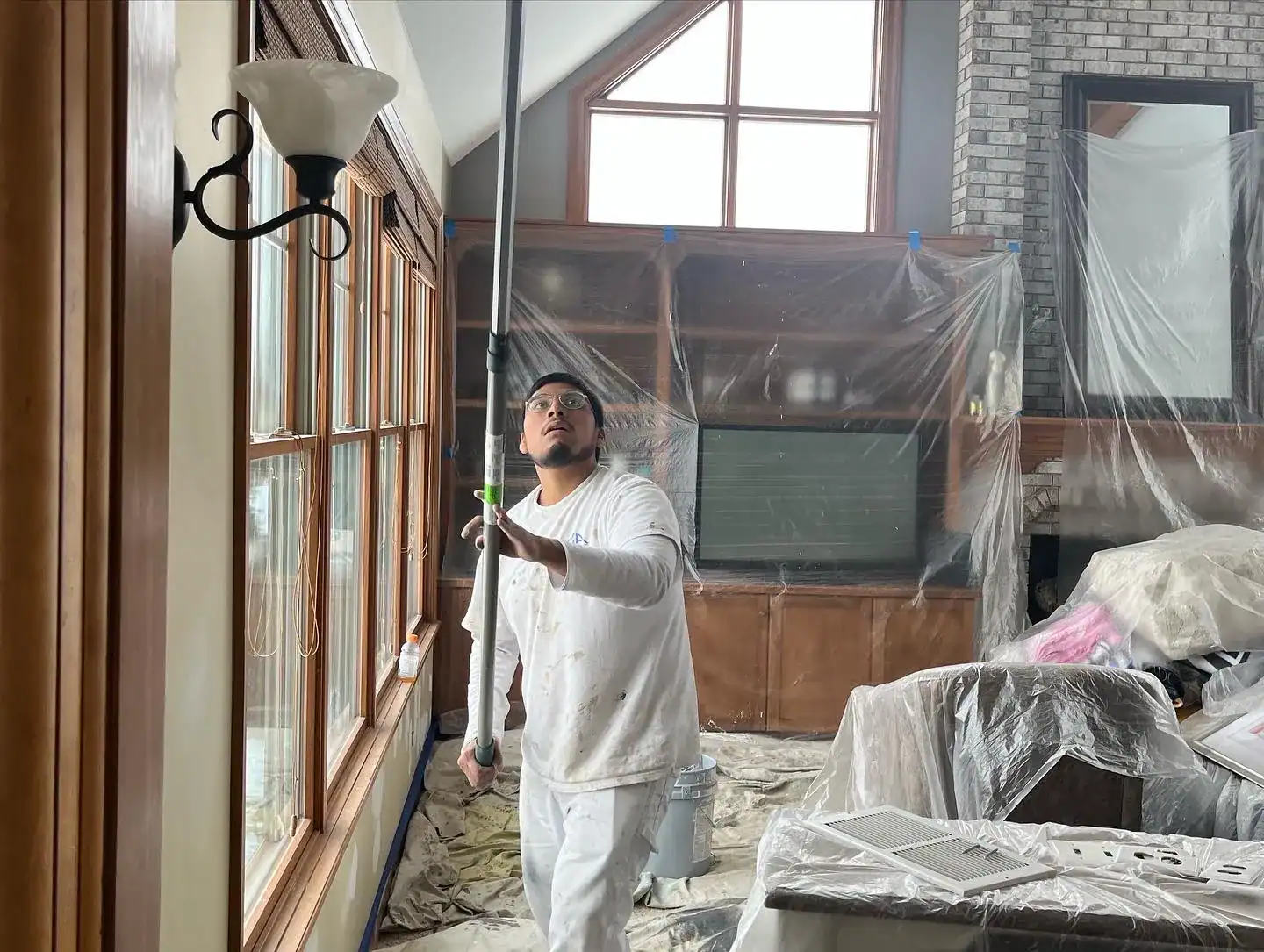
A single drop of paint on a hardwood floor takes one second to land and a lot longer to remove. That is why so many homeowners ask me, do painters move furniture, or is that on you? Knowing what to do before painters come is how you keep your floors, furniture, and trim looking the same on the last day as they did on the first.
I’m writing this from the painter’s side of the drop cloth. My crew at A&A Painting, Inc handles interior house painting for homeowners in Geneva, Saint Charles, and Batavia. Below, I’ll show you which jobs belong to the crew and which ones belong to you, so nothing falls through the cracks.
Why Floors, Furniture, and Trim Get Damaged During a Repaint
Most damage during a repaint is not dramatic. It comes from small things that add up over several days. A roller throws a fine mist. A ladder foot slides on a wood floor. Tape pulls up a strip of old paint from a baseboard.
Here is where the risk usually shows up:
| Common Risk | What Stops It | |
|---|---|---|
| Hardwood floors | Drips and ladder scratches | Taped paper or canvas with sealed edges |
| Carpet | Drips and sanding dust | Taped plastic with canvas on top |
| Couches and chairs | Roller spatter | Plastic sheeting tucked under all sides |
| Wood furniture | Scuffs when moved | Two people lifting, then a full cover |
| Trim and baseboards | Rough lines or peeled paint | Tape pressed tight and pulled on time |
There is also the part nobody sees. Some homeowners feel uneasy about having a crew in their home for days. You might wonder if a favorite chair or a stair rail will come out with a mark on it. That feeling makes sense. Hiring help should take worry off your plate, not add a new repair list to it.
Do Painters Move Furniture? What My Crew Handles and What You Handle
Every company sets its own rules here, so ask before the first day instead of guessing. This is how the work splits on most of my projects:
Heavy pieces that stay in a room either get covered where they sit or shifted away from the walls. We settle which during your free walkthrough, so there are no surprises.
Before any painting starts, my crew covers your furniture, flooring, and fixtures. We work room by room, so the rest of your home stays livable while we paint. You also get daily updates, so you always know which room is next. Every full interior house painting project from A&A Painting, Inc includes a written one-year workmanship warranty.
How to Cover Floors When Painting
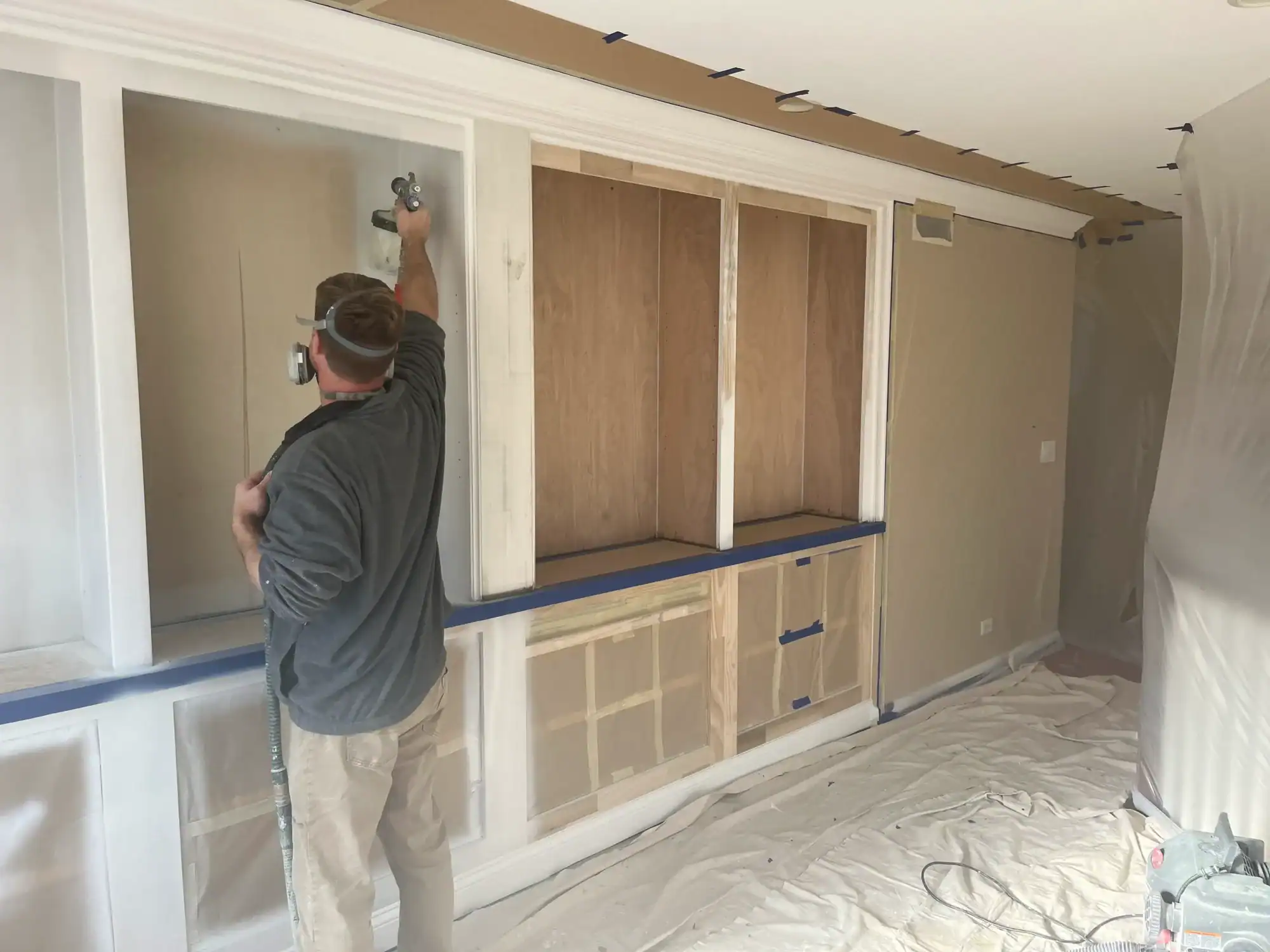
Floor protection for painting only works when the cover stays put and the seams stay closed. A loose sheet slides around and lets drips land in the gaps.
| Material | Works Best On | Watch Out For |
|---|---|---|
| Canvas drop cloth | Hardwood and walkways | Spills can soak through |
| Plastic sheeting | Carpet and dust control | Slippery on hard floors |
| Rosin paper or floorboard | Hardwood and tile | Seams need tape |
On my jobs, the crew tapes the edges along the baseboards and overlaps every seam. Ladders get set down gently, never dragged. If you have rugs, roll them up and store them in another room before we arrive.
Protecting Furniture That Stays in the Room
Not every piece can leave the room. A sectional, a piano, or a heavy dresser often stays put. That’s fine, as long as it is covered and handled the right way.
Protecting Trim, Baseboards, and Stair Rails
Trim is where a careful crew and a rushed crew look the most different. Clean lines come from good prep, not luck. My crew tapes and preps trim before any paint goes on, so the finished edges look crisp.
Timing matters, too. 3M rates its ScotchBlue Original painter’s tape for clean removal for up to 14 days. Tape left on longer than its rating can leave sticky residue behind. It can also pull paint off when it comes up. We pull tape once the paint is dry to the touch, slowly, at an angle.
Stained wood rails and built-ins need their own cover. A wrap of tape and plastic keeps wall paint off the wood grain, which is much harder to fix than painted trim.
Older Geneva Homes Need Extra Protection
Geneva has a lot of history in its housing. Census data shows about 1 in 10 homes in Geneva was built before 1940. Any home built before 1978 may have lead paint under the newer layers.
That changes the rules for floor protection. Under the EPA’s Renovation, Repair and Painting Rule, paid work that disturbs more than 6 square feet of painted surface per room in a pre-1978 home must follow lead-safe practices. Floors in the work area must be covered with taped-down plastic at least 6 feet past the work surface. The firm doing the work must also be EPA certified.
If your home was built before 1978, ask every painter you talk to for their EPA lead-safe firm certification before you sign anything.
What to Do Before Painters Come: A Simple Plan
You don’t need to do the heavy lifting. A short checklist covers your part:
What Happens When Protection Gets Skipped
When floors and furniture aren’t covered well, small slips turn into separate repair projects. Paint dried into hardwood grain may mean sanding and refinishing that section. A drip on a fabric couch may need a cleaner or a new cushion cover. Trim with peeled paint along a tape line needs sanding and another coat.
None of that should come after a paint job. Good protection costs a little time up front and saves you from paying twice.
What a Well-Protected Repaint Looks Like
At the end of a project done right, the covers come off and the floors look exactly as they did before. Furniture goes back in place. Trim lines are straight and clean, and the room is vacuumed and ready to use.
One last tip. Latex paint dries to the touch in hours, but it can take 14 to 30 days to fully harden. For the first few weeks, leave a finger’s width of space between furniture and fresh walls so nothing sticks or scuffs.